

The Question Your Customer Never Asks Out Loud
/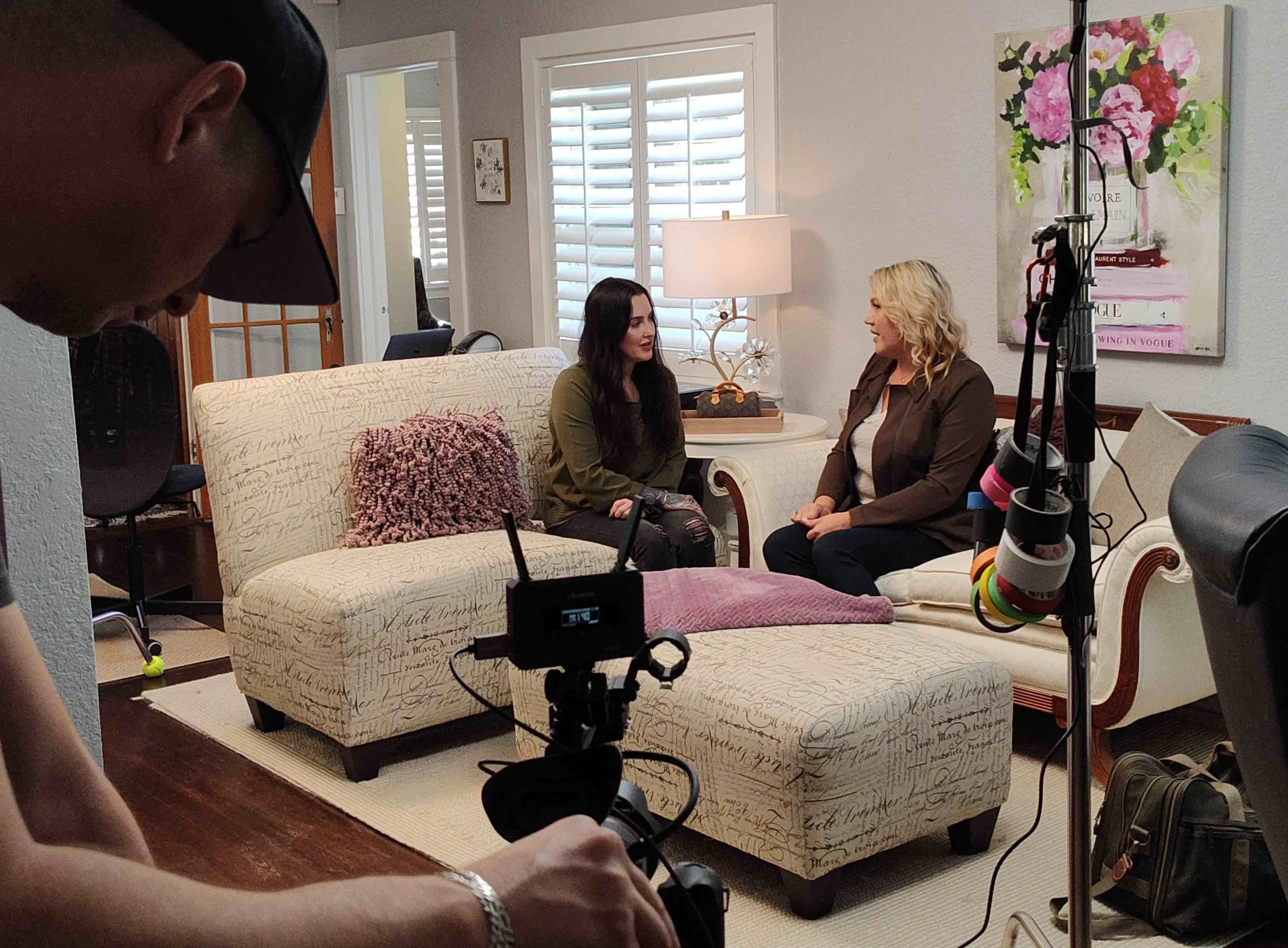
Behind the Scenes producing for One Purse, A nonprofit organization in Orlando
Everyone you're trying to reach has built a wall.
Not because they're cynical. Because they have to be. They're buried in messaging all day, most of it trying to sell them something, and they've gotten good at tuning it out before it lands. You do the same thing. We all do.
That is why a lot of business videos struggle before they ever get going. Not because they were made badly, but because they spent their whole run time on the wrong side of that wall. Talking louder. Listing reasons the company is great. Explaining services to someone who stopped listening in the first five seconds.
You don't get past the wall by talking louder. You get past it by saying one thing so true and so specific that the viewer recognizes it as their own.
The moment the wall drops
There's a single moment that changes everything. It's when the viewer thinks, "that's exactly my problem."
Before that moment, you're a stranger making claims. After it, you're someone who understands them. Everything before it is you talking. Everything after it is them listening. That one shift is the whole game, and very little else in the video matters until that happens.
Here's what most businesses miss. That moment doesn't come from describing your customer's problem the way you'd describe it. It comes from describing it the way they feel it, including the part they'd never say out loud.
The Unspoken Question
Every customer carries a question they ask themselves before they decide, and never say to your face. Your competitors answer the questions people say out loud. If your video answers the one they don't, the wall drops, because you've proven you understand what they're actually afraid of.
Finding it is a climb down. Four rungs.
1. Say the surface sentence. Write your customer's problem the way your whole industry says it. Then set it aside. Your customer has heard that sentence a hundred times. It's where you start, not where you stop.
2. Find the scene. Trade the category for a specific picture, and choose the one where the most is at stake. Their money, their family, their name, their years. A category is forgettable. A scene feels real.
3. Name the feeling. In that scene, what are they feeling that they'd never admit to you? Fear. Shame. Exhaustion. A hope they're embarrassed to say out loud.
4. Write their unspoken question. The exact sentence running in their head before they decide. That's the question your video has to answer.
What this looks like
Say you're a custom home builder.
Surface: "well-built, on time, on budget." Every builder says it.
Scene: a half-framed house, the contractor's calls that stopped coming, a family still paying rent while the lot sits quiet.
Feeling: quietly terrified of handing a stranger a large sum and the place their family will live in for years, and getting it wrong.
Unspoken question: "Is this the one who leaves me stranded?"
Now answer it. Not with "quality and budget," the question nobody's asking. Answer the real one, on camera, in plain words:
"You've heard the stories. The builder who goes quiet the second something goes wrong. I understand why people worry about that. Here's how I work. When there's a problem on your build, that's when you hear from me most, not least. You get my cell, not an office line, and a call every Friday, good news or bad."
That answer works for one reason. It names the fear out loud, then backs it with something specific. Not a claim. A practice. The viewer doesn't think "this company builds houses." They think "this person understands what I'm afraid of, and he just told me what he'll do about it." That's the wall coming down.
Why this has to be video
You could write that answer in a paragraph. It wouldn't land the same way, and here's why.
The wall isn't made of logic. It's made of distrust. And distrust doesn't dissolve because you worded something well. It dissolves when the viewer sees a real person, hears the tone of their voice, watches their face while they say the true thing. Trust often travels through people, and video can carry things a paragraph cannot: tone, hesitation, confidence, eye contact, and presence. That's the reason to answer the unspoken question on camera instead of on a page.
So what belongs in the video
Once you know the unspoken question, what belongs answers itself. Anything that helps you name that question and answer it belongs. Everything else is what you cut.
The company history usually goes. The service list nobody asked about goes. The founder's long origin story goes, unless it's the reason he understands the fear better than anyone. What survives is the problem in the customer's own words, the honest answer to their real question, the real people they'd be trusting, and the proof your answer is more than a claim.
That's the whole job. Find the question your customer never says out loud. Answer it, on camera, with a real person. Cut everything that doesn't serve it.
If you're planning a video and you're not sure what that question is for your business, that's the conversation worth having first. It's the part that decides whether everything after it works.