

The Skeptic in the Back of the Room
/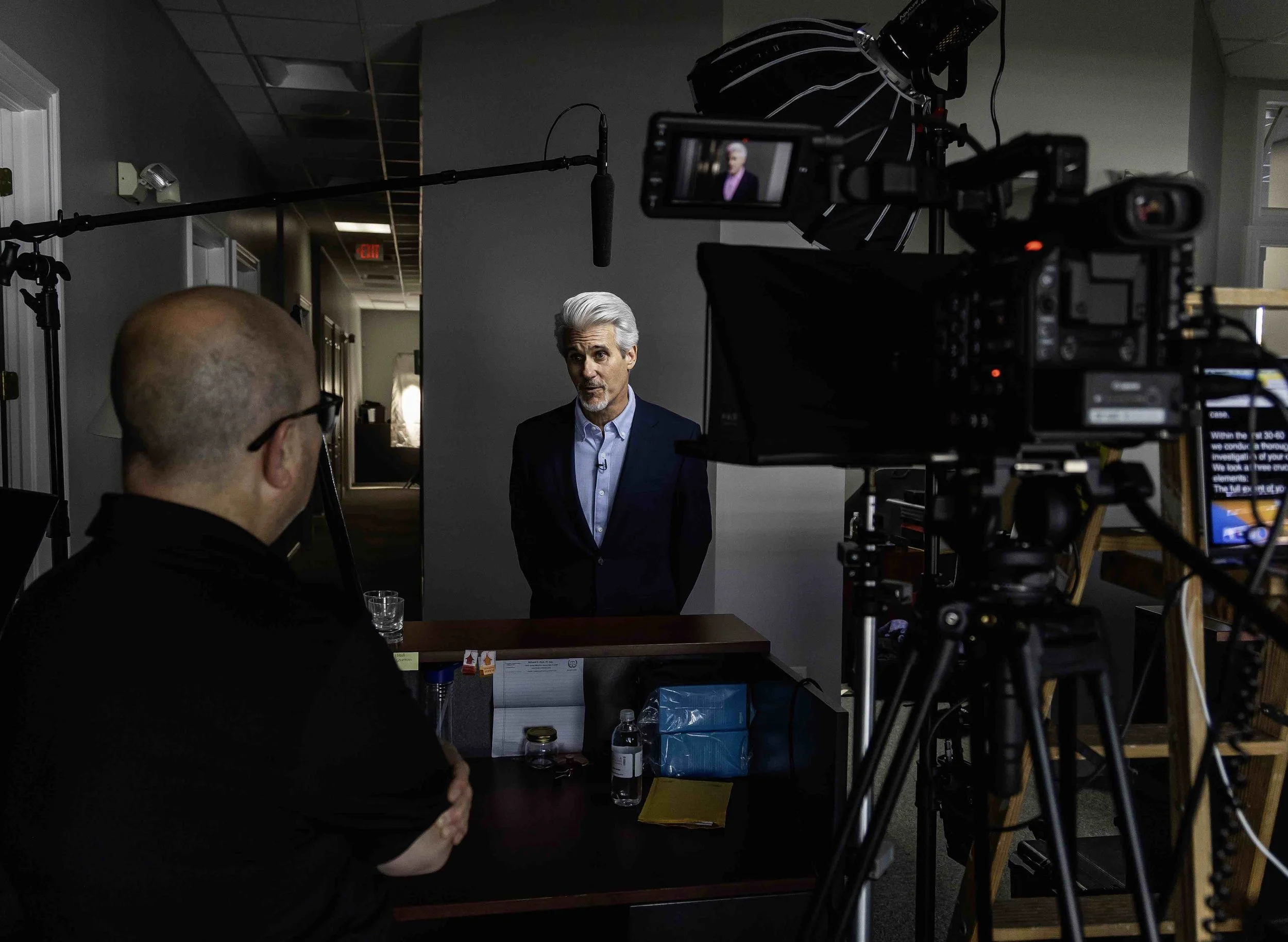
Behind the Scenes producing for PErsonal injury firm, scott marshall law
Somewhere in the middle of most interviews I do, I stop being on my client's side.
They don't necessarily notice. I'm nodding, asking questions, still the person they hired to get this right. But part of me has to quietly leave the chair and go to the back of the room, and sit with the people who don't know them yet. Those are the people the video actually has to reach, and they're a lot harder to win than the ones already in the room with us.
I know it sounds like a strange way to treat someone who's paying me to make them look good, but it's the only way I know to make a video that works on the people it's for.
The one you have to win over isn't the person who already likes you. It's the one who's a little guarded and a little tired, who has been pitched by five organizations that do more or less what you do and said more or less what you're about to say. If the video doesn't get past him, it doesn't much matter who else liked it.
The trouble is that he hears your sentences differently than you do. When you've spent years inside something, you say "we really care about our clients," and your head fills in the ten specific people and the hard week and the thing you did last March that proves it. All of that is real to you. He just hears what he's heard everywhere else.
So I don't take the first answer. If I did, I'd ask soft questions and get soft ones back. "Tell me about your commitment to quality" buys you a paragraph nobody really remembers. So instead I turn things around. What would the prospect ask if he were allowed in the room? How would anyone actually know that's true? What do you do that the place down the street doesn't? I'm after something specific, something he'd actually have to be doing.
The hard part is that the weak answer usually sounds great in the moment. You give me a smooth line, the people in the room nod, and it feels like we got something. But that quick agreement is usually a sign the line is familiar, and familiar is exactly what a stranger tunes out. The answers that make someone pause before they talk or feel super personal are the ones that tend to hold up once the video is in front of people who don't know you.
Let me show you with one I think about a lot.
Say I'm making a video for a home inspector. Ask him what makes him good and you get the honest, useless version: "I do thorough inspections and I give every client a detailed report." True, probably, and exactly what every inspector says.
Here's what the skeptic in the back is thinking while that plays. My real estate agent is the one who recommended this guy. My agent only gets paid if I buy the house. So is this inspector really working for me, or is he being gentle because the agent who feeds him referrals wants the deal to close? That's the fear, and the smooth answer never touches it.
So I don't ask him about thoroughness. I ask the uncomfortable one. Most of your business comes from agent referrals, right? What happens to those referrals when you kill a deal, and can you tell me about a time you did it anyway?
That's where the real thing comes out. Something like this:
"The honest answer is that the agents who send me work want deals to close, and sometimes I'm the reason one doesn't. I had a lakefront house last year…I found out that the seawall was failing from the back side, where you'd never see it standing on the lawn. On a lake that's a fifty or sixty thousand dollar repair. I wrote it up straight and the buyers walked. The agent who sent them never called me again. That cost me a steady source of work. But my name is on that report. If I'd softened it and that family's wall gave out in two years, that's on me, not the agent who's long gone to the next sale."
That answer works because he didn't tell you he was independent. He showed you what his independence cost him, and that's something no inspector trying to fool you would ever volunteer. It was sitting there the whole time. Somebody just had to ask the question that dug it out.
That's a home inspector, but just about everyone has a story like that in them. It just has to be dug out. Whoever you're talking to is sitting there wondering the same basic thing that buyer was, are you telling me what's good for me, or what's good for you. Answer that before they have to ask it, and you've got something.
That's who I'm listening for while the camera rolls. Not to catch you out, but to find the parts of what you're saying that are strong enough to survive a stranger, and to set aside the parts that aren't. It's the part people don't picture when they hire a video company. Plenty of people own good cameras. What you're paying for is someone whose whole attention is on that skeptic in the back, who will tell you when an answer only pleases the room, and who keeps digging until you land on one that reaches the people who weren't in it.
If you're planning a video, or you've got one that sounds a little too much like everyone else's, that's the conversation worth having first.